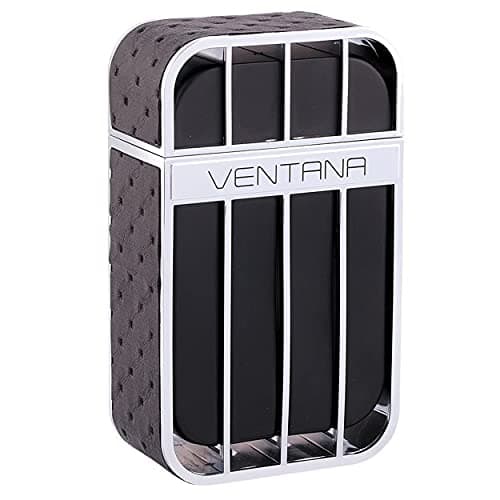
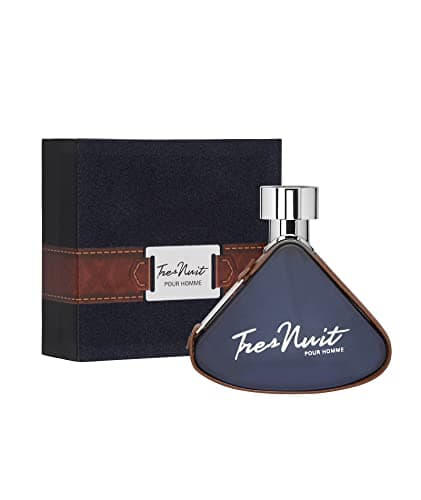
Ventana is the bottle people mean when they say a clone can be good enough. It is Armaf's reading of Dior Sauvage, it costs a small fraction of what the original does, and the fragrance community has spent most of a decade arguing about how close it actually gets. The short answer is: very close in one half of the wear, and clearly different in the other. The useful part is that the difference sits in a specific, predictable place — so you can decide whether it matters to you before you spend anything.
How it smells
Fragrantica publishes the pyramid as grapefruit, lemon and mandarin orange on top; lavender, geranium, vetiver and patchouli through the heart; and cedar, amber and precious woods in the base. Parfumo's listing for the same bottle adds bergamot and a red-fruit accord to the opening and labdanum to the base. The two disagree at the edges and agree on the shape, and the shape is the modern blue fragrance in its standard form: bright citrus up front, an aromatic lavender-and-herb middle, and a warm ambery-woody base that does most of the actual work.
What that means on skin is a fresh, faintly fruity citrus opening that turns clean and slightly powdery inside the first hour, over an amber and cedar base that carries the rest of the wear. Fragrantica classifies it as a woody aromatic and its top-voted accords are citrus, aromatic, woody and fresh spicy, which is a fair description of what you get. The word owners reach for most often is versatile. The word they reach for second is safe. Both are meant as compliments, and both are also the limitation — this is a fragrance designed to be unobjectionable, and it succeeds completely.
How close it actually gets to Sauvage
This is the only question most people arrive with, so here is the honest version rather than the marketing one.
Parfumo's community "smells similar" vote puts Dior Sauvage Eau de Toilette at the top of Ventana's list, which is about as direct a confirmation as crowd data gets. The most careful side-by-side published there comes from an owner who wore Ventana on one hand and Sauvage on the other and put the match at roughly eighty-five to ninety percent — and, more usefully, described exactly where the gap sits. Ventana opens fruitier where Sauvage opens peppery. Thirty to forty minutes in, the two start converging. After an hour they are close enough that the same owner described the exercise as surprising, with Sauvage holding onto its pepper and Ventana reading fresher and almost powdery.
Other owners on the same page describe it in near-identical language — "Sauvage EDT with less pepper and a little bit sweeter," "less pepper and more lavender," "Sauvage clone without the spice." Consensus this consistent is rare, and it points somewhere specific: the drydown is a genuinely close match, and the opening is not.
That gives you a clean decision rule. If what you love about Sauvage is the peppery blast in the first twenty minutes, Ventana will disappoint you every single time you spray it, and no amount of price advantage fixes that. If what you love is the clean, ambery, lavender-woody thing it becomes after an hour — which is what most people are actually wearing for most of the day — then Ventana gets you most of the way there for a small fraction of the outlay. The full field, including the bottles that beat it on quality while matching it less literally, is ranked in our Dior Sauvage dupes comparison.
Performance
Parfumo's aggregated user ratings put longevity at 7.2 out of 10 across 120 ratings and sillage at 7.0 across 116 — respectable numbers, and higher than the reputation budget clones usually carry. Individual owner reports cluster somewhere between five and eight hours depending on skin and spray count, and several state plainly that it does not last as long as the Sauvage it is chasing.
We score it slightly below where that community average sits, and the reason is the spread rather than the midpoint: a five-hour low end is a real outcome for a real number of owners, and the honest comparison point for a bottle sold on its resemblance to another bottle is that other bottle, which outlasts it. Ventana is an eau de parfum, which is the structural reason it performs as well as it does for the money — the ladder of initials is explained properly in our concentrations guide, and it is the single most useful thing to understand before comparing a cheap Arabian bottle with an expensive designer one.
When it works
Fragrantica's seasonal voting is unusually decisive here and worth trusting: spring leads with 562 votes and summer follows at 559, autumn sits at 477, and winter trails a long way back at 268. Daytime beats night by 592 votes to 473. That is the profile of a bright, citrus-led daily fragrance rather than an evening one, and it matches how the composition reads on paper.
In practice it is a work and daylight bottle. It is quiet enough for a shared office, inoffensive enough that nobody will comment, and cheap enough that spraying it four times on a hot afternoon costs you nothing worth thinking about — which is genuinely the point of a bottle like this. It is the wrong choice for a cold evening where you want presence, and the wrong choice if you want to be remembered.
The honest caveats
The bottle is the weak point, and owners are blunt about it. Parfumo's users rate the scent 7.7 out of 10 across 124 ratings and the value for money 8.4 across 81 — and they rate the presentation 4.9 across 129 ratings, which is the lowest score on that listing by a wide margin and one of the lowest we have come across on any bottle in this catalog. One owner statement consists of little more than the words "horrendous bottle." The juice is the reason to buy this; the packaging is something to tolerate.
It is a copy, and it does not pretend otherwise. Nobody is going to identify Ventana on you — they will either say nothing or say you smell like Sauvage. Whether that is a feature or a problem is a personal question, and we have argued both sides in are cologne dupes worth it.
Ordinary is the design goal, not a failure. One owner summarized it as a "dumb reach versatile fragrance," which is precise and is meant kindly. If you want a bottle you grab without deciding anything, this is one of the cheapest good ones. If you want a fragrance with a point of view, this is not it, and no amount of value argument will make it one.
Ventana against the obvious alternatives
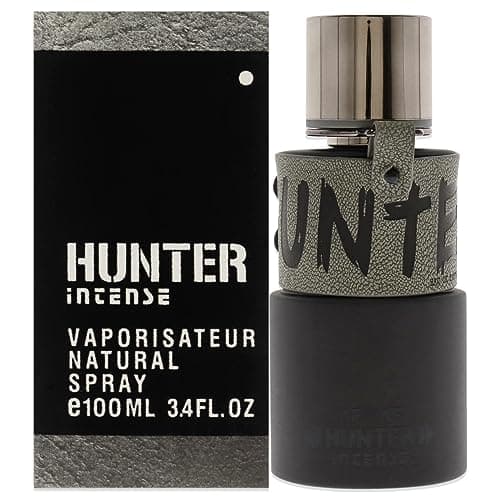
Armaf Hunter Intense is the house's other cheap fresh and the natural cross-shop. It reads as a hybrid of Sauvage and Paco Rabanne Invictus rather than a straight copy of either, and it is an eau de toilette where Ventana is an eau de parfum — so it wears lighter and fades sooner. Owning both is close to owning one fragrance twice.
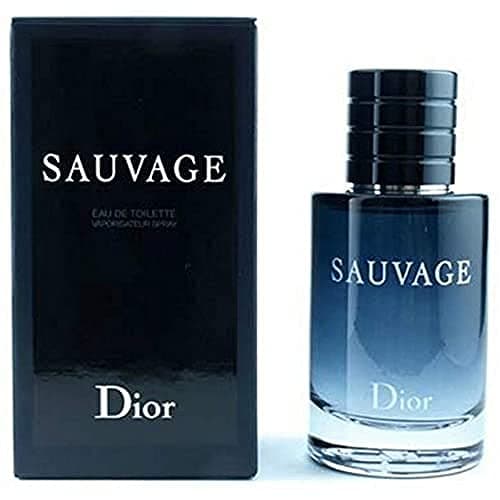
Dior Sauvage itself is the honest comparison, and it is worth being clear that it remains the better fragrance: sharper, more confident in the opening, and longer-lasting. What it is not is several times better, which is the arithmetic that keeps sending people to bottles like this one. Our full write-up is the Dior Sauvage review, and the head-to-head with the other blue giant is in Sauvage vs Bleu de Chanel.
Club de Nuit Urban Man Elixir is the bottle we rank above Ventana on quality and below it on literal accuracy — the better fragrance and the worse copy. It sits second in the Sauvage dupes ranking for exactly that reason.
Who should buy it
Buy it if you want the Sauvage drydown as a daily beater and do not care about the opening; if you need a cheap warm-weather office bottle you can over-spray without flinching; or if you are building a first collection and want the blue-fragrance slot filled without spending designer money — the method for that is in our collection-building guide.
Skip it if the peppery opening is the part of Sauvage you actually love; if you want something anyone will recognize as yours; if presentation matters to you; or if you already own any other Sauvage clone, because this occupies the identical slot in a wardrobe and adds nothing beside it.