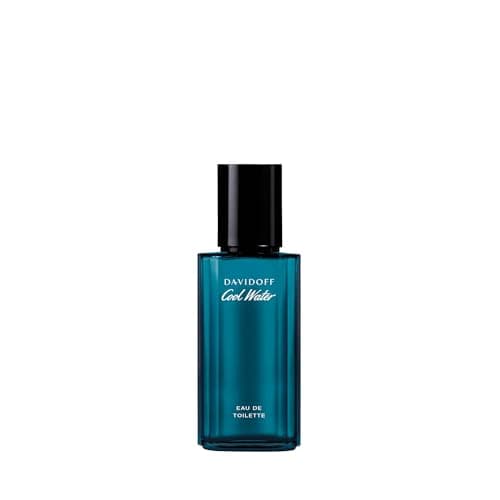
Cool Water launched in 1988, was composed by Pierre Bourdon, and did something almost no fragrance manages: it created a category. The clean, fresh, faintly marine style that dominates the men's shelf to this day starts here. Nearly forty years later it is still in production, still smells like itself, and costs less than a cinema ticket for two — which raises the only interesting question about it. Is a genre-defining fragrance still worth wearing once the genre has moved on?
How it smells
Cool Water is an aquatic fresh fougère. The opening is mint and green nuances over lavender, coriander and rosemary — bracing, herbal and slightly medicinal in the first minute, which is the part that throws people used to modern sweet freshies. The heart softens into geranium, neroli, jasmine and sandalwood, and the base is musk, oakmoss, cedar, tobacco and amber. What you actually perceive after twenty minutes is a clean, blue-gray, soapy-woody smell that reads as "showered and shaved" more than as any specific ingredient.
Two things are worth naming honestly. First, it is drier and more herbal than almost anything marketed as "fresh" today — there is no sugar in it. Second, it has been in continuous production long enough that it carries an era with it; plenty of people smell Cool Water and think of the 1990s rather than of a fragrance. Whether that is charm or baggage depends entirely on who is smelling you.
Performance
Moderate, and lower than the fragrance's reputation suggests. Owner consensus on modern batches lands around four to six hours on skin, with a strong first hour and a fast fade to a close skin scent. Long-time owners consistently report that current bottles feel lighter than the ones they bought in the 1990s — a common complaint across old designer eaux de toilette, since oakmoss in particular is now restricted under IFRA material standards. We have no way to measure batch-to-batch differences and we are not going to pretend otherwise, but the direction of those reports is consistent enough to be worth telling you before you buy.
Practically: expect to reapply if you want it past lunch, and treat it as a two-to-three spray fragrance in a shared room. Our longevity guide covers the moisturizer-and-clothing tricks that buy an EDT like this an extra hour or two.
Where it works
Hot weather, the office, the gym bag, anywhere clean and unobtrusive is the brief. It is genuinely excellent in heat: the herbal-mint opening reads as cooling in a way that sweet summer fragrances do not, which is why it still earns a mention alongside the picks in our summer ranking. It is a weak evening choice, a weak cold-weather choice and a poor date-night option — not because it smells bad, but because it does not smell like an occasion.
Who should skip it
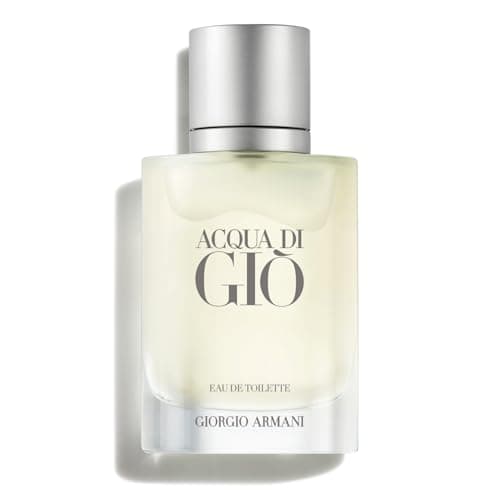
Skip it if you are in your early twenties and want to smell current: the fresh lane it invented has been refined by everything from Acqua di Gio to Sauvage, and those read contemporary in a way Cool Water no longer does. Skip it too if you want projection — several sub-$30 Arabian eaux de parfum in our under-$50 ranking comfortably out-last it. And skip it if herbal-medicinal openings put you off; the first sixty seconds are the most divisive part of the fragrance.
The honest verdict
Cool Water is not the best fresh fragrance you can buy in 2026, and at this price it does not have to be. It is a well-made, historically important, genuinely wearable clean scent that costs almost nothing, and it is one of the few bottles we would happily recommend buying without sampling first. Buy it as a cheap hot-weather workhorse, or as a piece of fragrance history you can actually wear. Do not buy it expecting the compliment machine the internet sometimes claims it is — that reputation was earned in 1992, on a formula nobody is selling today.