A fragrance you sniffed at a counter for four seconds and a fragrance you wore for eight hours are, functionally, two different products. Almost every expensive mistake in fragrance comes from confusing the two. Testing properly is not complicated, but it does take longer than a shop assistant would like.
Paper strips versus skin
A paper strip tells you what the fragrance smells like. Your skin tells you what it will smell like on you, which is the only question that matters. Skin chemistry — oiliness, pH, diet, temperature — changes how a fragrance develops, and the effect is largest on sweet and amber fragrances and smallest on citrus.
Use strips to shortlist and skin to decide. Three or four strips will tell you which two are worth putting on your wrists, and nothing beyond that.
Three at a time, maximum
Your nose fatigues fast. After roughly three or four fragrances in close succession, everything starts smelling like a variation of everything else — not because they are similar, but because your olfactory receptors have stopped reporting accurately.
Two on the wrists, one on the inner elbow, and stop. If you want to compare more, come back the next day. Anyone who tells you they evaluated fifteen fragrances in an afternoon is describing a shopping trip, not a test.
The coffee beans do nothing
Every fragrance counter keeps a bowl of coffee beans to "reset your nose" between samples. The research that has actually looked at this found no measurable advantage over sniffing plain air — coffee is simply another strong smell added to the pile rather than an eraser.
What perfumers do instead is smell their own skin: the crook of the elbow or the back of the hand, somewhere unsprayed. You are permanently habituated to your own scent, so it works as a neutral baseline. It is free, it travels with you, and unlike the coffee it is not adding a fourth fragrance to a nose that is already struggling with three.
Wait four hours before deciding
Fragrances are built in stages: a bright opening that lasts minutes, a heart that emerges over the first hour, and a base that is what you actually wear for most of the day. Buying on the opening is the single most common error, because the opening is designed to sell and the base is what you live with.
Give any fragrance you are seriously considering four hours on skin before you form a view — and ideally a full day. Our notes guide explains the structure and why the first two minutes are the least informative part of it.
Why samples beat store testing
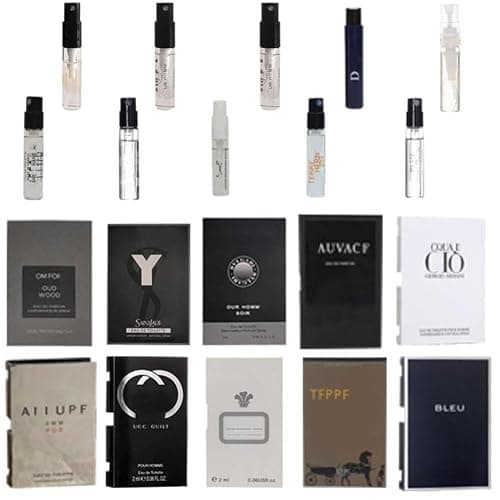
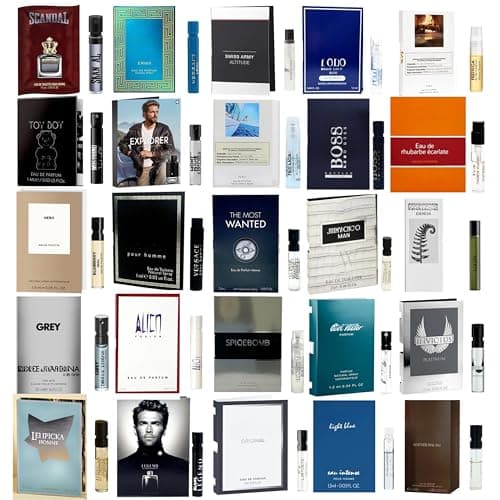
A shop lets you test for twenty minutes in a room that already smells of a hundred fragrances. A sample vial lets you test for a full day, at home, in your own climate, in the clothes you actually wear — and lets you smell it the next morning on your shirt, which is when a lot of fragrances reveal what they really are.
That is the whole argument for buying discovery sets before full bottles, and it is the single most money-saving habit in this hobby. The two sets below are the ones we would start with — one broad, one cheap — and our samples guide covers the rest of the field.
A few things not to do
- Do not rub your wrists together. It crushes the top notes and accelerates the fragrance past its opening.
- Do not test on a strongly moisturized or scented arm. Whatever is already on your skin joins the test.
- Do not decide in the shop. The room is saturated and so is your nose within the first five minutes.
- Do not test more than one sweet fragrance at a time. Sugar dominates a nose faster than anything else on the shelf.
Why your result will not match the reviews
When you test properly, the fragrance will behave differently on you than it did on whoever recommended it — often noticeably. That is not a fault in the method; it is skin. Oil content, temperature, dryness and even the bacteria on your skin change the rate at which individual molecules evaporate, which changes both the smell and the performance. The mechanism, and what to do about it, is in why cologne smells different on different people.