A fragrance smells different on different people mainly because skin is not a neutral surface. How much oil it produces, how warm it is, how dry it is and what is living on it all change the rate at which individual molecules evaporate — and since a fragrance is a sequence of molecules evaporating at different speeds, changing those speeds changes the smell. It is real, it is not in your head, and there is no bottle that is immune to it.
Oil is the biggest single factor
Sebum — the oil your skin produces — acts as a fixative. Oily skin captures and retains fragrance molecules and releases them slowly, which is why a bottle that lasts eight hours on one person can be gone in three on another. Fragrance houses are explicit about this: the oils on skin "capture and retain scent molecules, heightening the longevity of a particular fragrance", and fragrances on oily skin "tend to last longer and smell more intense". The reverse also holds — applied to dry skin, fragrances "tend to be less intense and evaporate more quickly".
This is the mechanism behind the single most useful trick in fragrance, and it is nearly free: apply unscented moisturizer first. You are not adding scent, you are giving the fragrance something to hold onto. It does more for longevity than any of the folklore in our make-it-last guide.
Temperature, and why the shop card lied to you
Your skin sits at roughly 37°C. A paper blotter in an air-conditioned shop sits at room temperature, fifteen degrees cooler. Molecules evaporate faster when they are warmer, so a fragrance on skin unfolds faster, louder and in a different order than the same fragrance on card — and the warm base notes that take an hour to appear on paper can arrive in twenty minutes on a warm chest.
The same physics explains seasonality. Heat amplifies and accelerates, which is why a heavy amber that is perfect in January is oppressive in July, and why the identical spray count produces a much bigger cloud on a hot day. If you have ever wondered why we rank fragrances by season at all, this is why.
pH, diet, hormones and the microbiome
Beyond oil and heat, several smaller factors stack. Skin pH varies between people and shifts the balance of what you perceive — musky base notes can read stronger on less acidic skin, while bright citrus top notes burn off faster on more acidic skin. Strongly flavored food genuinely participates: garlic and heavy spices leave aromatic compounds in sweat that blend with whatever you are wearing. Hormonal changes alter how much you sweat and therefore how a fragrance behaves. And your skin hosts a microbiome — a large population of bacteria whose metabolic by-products are themselves smells that sit underneath your fragrance.
Two honest caveats. Individually these effects are much smaller than the oil-and-temperature ones, and the popular claim that you can fix your fragrance by fixing your skin's pH is not something we would rely on. The useful takeaway is not a protocol, it is an expectation: a fragrance on you will differ noticeably from the same fragrance on the person who recommended it, and no amount of research substitutes for wearing it.
What is definitely not happening
It is worth clearing three things out of the way, because they get blamed for this constantly.
You did not get a fake. Possible, but skin variation is a far more likely explanation than a counterfeit, particularly if it smells right for the first ten minutes and wrong afterwards. The genuine red flags are physical — packaging, batch codes, spray quality — and they are listed in our fake-spotting guide.
It is probably not reformulation. That does happen, but it affects everybody equally. If the bottle smells wrong on you and right on your friend from the same batch, the variable is you, not the liquid.
And it has not "faded" as fast as you think. Your nose stops reporting a constant smell within twenty to thirty minutes while everyone else still detects it perfectly. Before concluding a fragrance died on your skin, smell a sleeve rather than your wrist, or ask someone. Our testing guide has the full method.
What to look for when you buy, given all this
Two practical adjustments. First, if your skin is dry, bias towards higher concentrations and heavier bases — an eau de parfum with amber, resin or musk underneath will survive on you where a citrus eau de toilette will not. If your skin is oily, you have the opposite luxury: light fresh fragrances that disappoint most people will perform well on you, and heavy sweet ones may be too much.
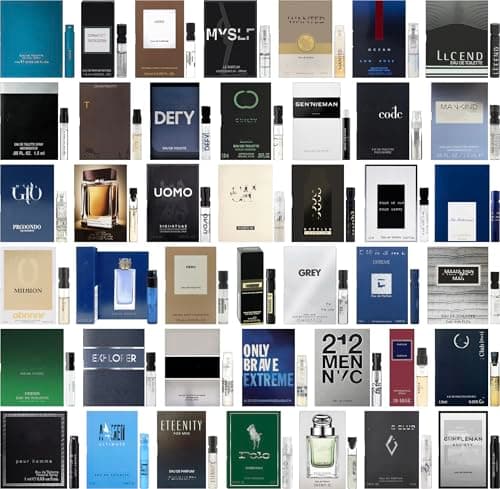
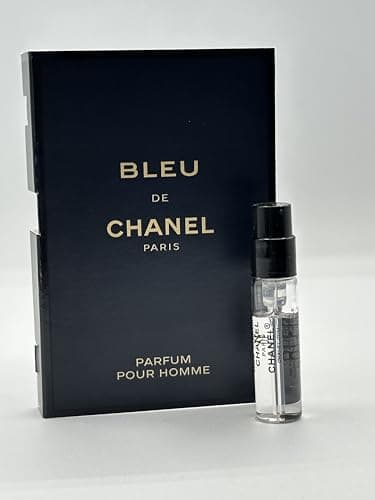
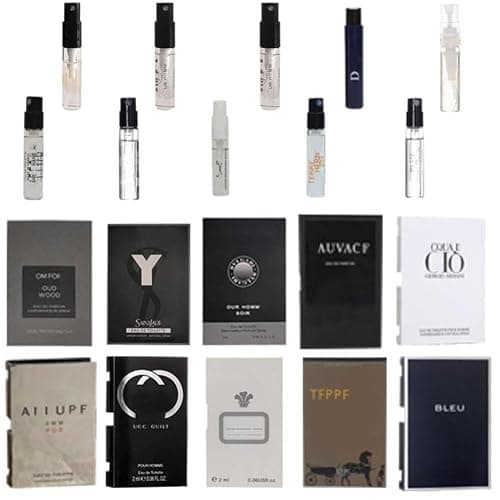
Second, and much more important: test on your own skin, over a full day, before you buy a full bottle. Not on a card, not for five minutes in a shop, and not on the back of your hand — which is both drier and less warm than the places you actually spray. That is the entire reason samplers and decants exist, and it is the only genuine solution to everything on this page. The three options below are the cheapest ways to do it: a designer vial set to test many fragrances at once, a lower-cost set to start with, and a single genuine manufacturer vial for the case where you already know which expensive bottle you are considering.
Testing properly
One fragrance, one day, one spot
Wear a single fragrance at a time, on the skin you would normally spray — neck or chest, not the back of the hand — and live a normal day in it. Check at thirty minutes, two hours and six hours. Two fragrances at once tells you nothing, because you cannot separate them, and a five-minute test in a shop only ever shows you the top notes. The full protocol is in how to test cologne.
Moisturise first, then judge
If your skin is dry, test both ways — bare and over unscented lotion. The difference is often large enough to change whether a fragrance is worth buying at all, and if it is, that is also your ongoing application routine.
Buy the sampler before the bottle you were recommended
The classic expensive mistake is buying a $120 flagship because it smelled extraordinary on a friend. For around $17 to $27 a vial set lets you find out which of eight or ten famous fragrances actually work on you — and the answer is usually not the one you expected. Our sampler ranking and discovery-set guide cover the sets worth buying.
When you already know which bottle you want
A manufacturer's own small vial or travel refill is the honest way to try a single expensive fragrance on your skin without a full-bottle commitment — and it sidesteps the counterfeit problem that follows heavily-discounted flagships. There is more on the format in fragrance decants, and on where to buy safely in where to buy fragrance.