Skip to content
Top NoteCo

Fragrance Guides · Fragrance Guides

Perfume Oils vs Sprays

Alcohol-free oils, attars and CPOs explained — what they genuinely do better than a spray, and the one thing they can never do.

By Stephen V., Editor, Top Note CoLast updated How we pick

#ad— We're reader-supported. When you buy through links on this page we may earn an Amazon Associates commission, at no extra cost to you. It never changes a verdict — we routinely point you at the cheaper bottle. Full disclosure.

Perfume Oils vs Sprays

A perfume oil is fragrance suspended in a carrier oil instead of alcohol. That single difference changes almost everything about how it wears: it opens far quieter, sits much closer to the skin, and stays there for a long time. Whether that is an upgrade or a downgrade depends entirely on what you want a fragrance to do.

What is actually in the bottle

An eau de parfum is roughly fifteen to twenty percent aromatic compounds dissolved in alcohol, which does a specific job: it flashes off your skin within seconds and throws the fragrance into the air as it goes. That is where the opening blast, the projection and the sillage all come from. A concentrated perfume oil (often sold as a CPO, or as an attar in the Middle Eastern tradition) removes the alcohol entirely and suspends the aromatic materials in a neutral carrier — jojoba, fractionated coconut, or sandalwood oil. Nothing evaporates quickly, so nothing is thrown into the air.

FormatCarrierHow it wearsTypical longevity
Eau de Toilette (EDT)AlcoholBig opening, fades steadily3–5 hours
Eau de Parfum (EDP)AlcoholStrong opening and sillage5–8 hours
Concentrated perfume oil / attarCarrier oil (no alcohol)Quiet opening, close to skin8–12 hours

Do perfume oils actually last longer?

On skin, usually yes — a good oil commonly runs eight to twelve hours where an eau de parfum runs five to eight, because there is no alcohol accelerating evaporation and the oil releases slowly through body heat. But the popular explanation for this is wrong in a way worth correcting. Longevity is driven by how much aromatic material is present, not by the carrier itself. An oil that is lightly dosed will not outlast a densely built EDP. The format helps; it does not do the work on its own.

The clearer difference is not duration but shape. An alcohol spray is loud then quiet. An oil is quiet then quiet for a very long time. Which one "lasts longer" depends on whether you are measuring the last hour you can smell it on your own wrist, or the last hour anybody else can.

The trade you are actually making

You give up projection. An oil creates a personal scent bubble — noticeable when someone is close to you, effectively invisible from across a room. For an office, a first date at a small table, a lecture hall or anywhere with a fragrance policy, that is precisely the right behaviour, and it is why oils are a genuinely good answer to the shared-space problem covered in our office ranking. If what you want is to be noticed as you walk past, an oil will disappoint you and a long-lasting spray is the right purchase.

Skin, sensitivity and the practical stuff

Because there is no alcohol, oils are generally gentler on reactive or dry skin — alcohol is drying and is the usual culprit when a spray stings after a shave. Oils are also more economical than they look: most come in 10–20 ml bottles that appear tiny next to a 100 ml spray, but two dabs is a full application, so a 12 ml bottle can last months. The application itself is slower and needs more care, since a dab or rollerball puts the fragrance exactly where you place it and nowhere else. Do not rub it in — the same rule as with sprays, for the same reason, covered in how to apply cologne.

A note on the phrase "fragrance oils"

Search for fragrance oils and you will get two completely different products. One is what this page is about: wearable, skin-safe perfume concentrate. The other is bulk scent oil sold for candles, soap and diffusers, which is not formulated or tested for skin contact. They are often sold in similar-looking amber bottles at similar prices. Before you buy, check the listing explicitly says it is for skin or body use — a candle-making oil is not a perfume, whatever it smells like.

So which should you buy?

Buy a spray if you want presence, compliments, a fragrance that announces itself, or something for cold weather where sillage is the point. Buy an oil if you want all-day wear without imposing on anyone, if alcohol irritates your skin, if you work somewhere with a fragrance policy, or if you like the idea of a scent that only people close to you get to know about. Plenty of people own both, and use the oil on weekdays and the spray at the weekend, which is a perfectly sensible way to run a small collection.

The short answer

Quick picks

#ad · Live prices from the Amazon Product API, as of Aug 13, 2026. Where we have no verified live price we show none — we would rather leave a gap than print a number that has rotted.

In detail

The picks, in full

01
Al Haramain Al Haramain Tanasuk Concentrated Perfume Oil (12 ml)

The oil that proves the format is not just for skin scents

Al Haramain Tanasuk Concentrated Perfume Oil (12 ml)

Rose / Amber GourmandPerfume oilVery longFall & winter
7.4/10

Rose, grenadine and saffron over dry wood, jasmine and amber, finishing on vanilla, musk and brown sugar. This is the oil that changes people's minds about the format — the syrupy rose-and-brown-sugar accord is genuinely distinctive, and it projects better than an oil has any right to by owner reports.

Longevity
9
Sillage
7
Projection
6
Value
9
Versatility
6

Pros

  • Syrupy rose, saffron and brown sugar — distinctive, not a generic musk
  • Unusually strong projection and sillage for an alcohol-free oil
  • Twelve millilitres lasts months at two dabs a wear

Cons

  • Sweet and dense — this is a cold-weather, evening proposition
  • A dab bottle, so application takes more care than a spray

Don't buy this if…

you want a fresh or office-safe scent — this is rich, sweet and deliberately noticeable.

$19.84View on Amazon

Price as of Aug 13, 2026. Prices change — Amazon's is the one that counts.

#ad · we may earn a commission from this link to Al Haramain Tanasuk Concentrated Perfume Oil (12 ml)

02
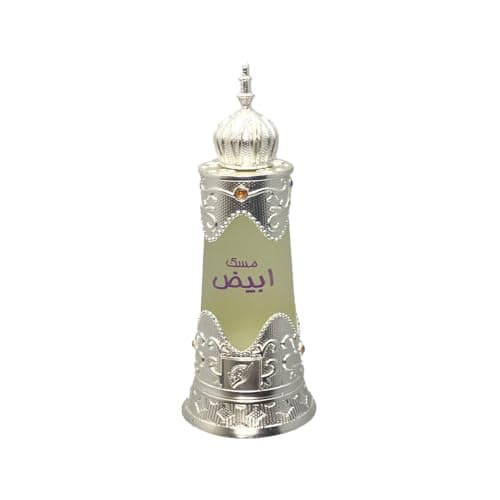
Afnan Afnan Musk Abiyad Concentrated Perfume Oil (20 ml)

The first oil to try, and the safest one to wear anywhere

Afnan Musk Abiyad Concentrated Perfume Oil (20 ml)

White MuskPerfume oilSkin scent, longYear-round
6.6/10

A soft, powdery white musk with a touch of rose and sandalwood — the safest possible introduction to Middle Eastern perfume oils, and the one most often recommended to someone trying the format for the first time. It does not project much at all; what it does is make you smell clean and quietly good for a very long time.

Longevity
8
Sillage
4
Projection
3
Value
9
Versatility
9

Pros

  • Clean, powdery and essentially impossible to offend anyone with
  • Layers under almost any spray fragrance without fighting it
  • The standard beginner recommendation for the whole oil category

Cons

  • Sits on the skin — nobody notices this from more than an arm away
  • Simple by design, so it will not hold a fragrance hobbyist's interest

Don't buy this if…

you want compliments from across the room. This is a private, close-wearing scent by design.

$22.98View on Amazon

Price as of Aug 13, 2026. Prices change — Amazon's is the one that counts.

#ad · we may earn a commission from this link to Afnan Musk Abiyad Concentrated Perfume Oil (20 ml)

03
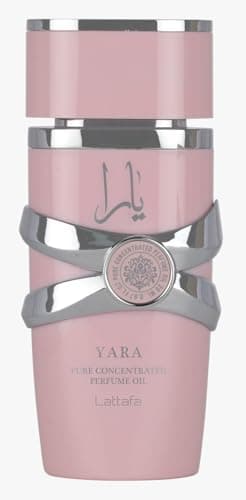
Lattafa Lattafa Yara Concentrated Perfume Oil (20 ml)

Yara's sweetness without the room-filling opening

Lattafa Yara Concentrated Perfume Oil (20 ml)

Gourmand / Fruity FloralPerfume oilVery long, close to skinFall & winter
6.6/10

The oil version of the sweet vanilla-and-tropical-fruit bottle that made Lattafa famous in the US. With no alcohol to flash off, it opens far quieter than the spray and then sits on the skin for most of a day — which is exactly the trade oils make: you lose the first-hour announcement and gain the long tail.

Longevity
9
Sillage
5
Projection
4
Value
9
Versatility
6

Pros

  • Alcohol-free, so it is gentler on reactive skin than a spray
  • Wears close and long — the classic oil performance curve
  • Twenty millilitres of concentrate goes a very long way

Cons

  • Almost no projection compared with the spray — people have to be near you
  • Dabbing is slower and messier than spraying

Don't buy this if…

you actually want the sillage. If the point is being noticed across a room, buy the EDP spray instead.

$22.02View on Amazon

$29.9927% off

Price as of Aug 13, 2026. Prices change — Amazon's is the one that counts.

#ad · we may earn a commission from this link to Lattafa Yara Concentrated Perfume Oil (20 ml)

How we picked

We do not run a testing lab — and we say so

Our rankings compile published note structures and concentration data, aggregate owner and community longevity and sillage reports, and apply a published rubric to every bottle — with first-hand impressions only where they're genuine. The scores are judgments from that research; they are not lab measurements, and we do not claim to have smelled every batch. Formulations change; where a claim came from someone else, we name and link them in Sources.

Questions

Frequently asked

Do perfume oils last longer than sprays?

On skin, usually — a good concentrated perfume oil commonly runs eight to twelve hours against five to eight for an eau de parfum, because there is no alcohol speeding up evaporation. But longevity comes from how much aromatic material is in the bottle, not from the carrier alone. A weak oil will not outlast a well-built EDP.

What is the difference between an attar and a perfume?

An attar is fragrance suspended in a carrier oil with no alcohol, applied by dabbing; a Western perfume dissolves the same kind of materials in alcohol and sprays them. The attar wears close to the skin for a long time, the spray projects into the room and fades sooner.

Are perfume oils better for sensitive skin?

Generally yes, because alcohol is the drying, stinging component in a conventional spray — particularly on freshly shaved or already irritated skin. Oils are not automatically hypoallergenic, though; the aromatic materials themselves can still cause a reaction, so patch-test anything new on a small area first.

Can you wear perfume oil to work?

Oils are one of the better options for a shared office precisely because they barely project — the scent stays within about an arm's length. If your workplace has a fragrance policy, an oil applied lightly is far less likely to cause a problem than a spray. See our office ranking for the same logic applied to sprays.

Are fragrance oils and perfume oils the same thing?

No, and the naming causes real confusion. Wearable perfume oils and attars are formulated for skin. "Fragrance oil" is also the trade term for bulk scent used in candles, soap and diffusers, which is not made for skin contact. Check the listing says body or skin use before buying.

More in Fragrance Guides

Keep exploring fragrance guides

Keep reading

How we sourced this

Sources

Longevity, sillage and note data are compiled from published manufacturer information and aggregated public reviews, labeled as such — not our own lab measurements. Prices render live from Amazon.