Skip to content
Top NoteCo

Fragrance Guides · Fragrance Guides

Does Cologne Need to Macerate?

The most repeated piece of advice in budget fragrance: leave the new bottle alone for a month. Here is what is actually happening, and what is not.

By Stephen V., Editor, Top Note CoLast updated How we pick

#ad— We're reader-supported. When you buy through links on this page we may earn an Amazon Associates commission, at no extra cost to you. It never changes a verdict — we routinely point you at the cheaper bottle. Full disclosure.

Does Cologne Need to Macerate?

Short answer: your bottle does not need you to macerate it, and waiting a few weeks before judging a new fragrance is still good advice. Those two statements are not in conflict. Maceration is a real step in perfume production that happens at the factory, before the bottle is filled. What happens on your shelf afterwards is much smaller, much slower, and much harder to separate from your own nose adjusting. The practical conclusion is the same either way: do not write off a new bottle in week one, and do not do anything exotic to it.

What maceration actually is

In production, maceration is the stage where the fragrance concentrate is blended into alcohol and left to rest, typically in cool, dark, temperature-controlled tanks, so the aroma materials and the solvent reach a stable equilibrium. It is usually followed by chilling and filtration to remove anything that will not stay dissolved. This is a manufacturing step with a defined purpose, and it is complete before the juice reaches a bottle.

Maturation is a related term, usually used for the earlier stage where the concentrate itself is left to rest before dilution. Enthusiast forums use the two words loosely and often interchangeably, which is part of why the topic is so confused.

So why does a new bottle so often smell thin?

Several explanations are plausible, and they are not mutually exclusive.

The first spray is not representative. The tube and atomizer are full of air on a fresh bottle. The first two or three sprays are genuinely weaker and more alcohol-forward than everything after them. This one is uncontroversial and accounts for more disappointment than anything else.

Your nose adapts quickly.A fragrance you wear for the first time is the one you are most alert to, and the fourth wearing of anything smells different from the first because you have started predicting it. Conversely, people who report that a bottle "opened up" after a month have also had a month of learning what to look for in it. There is no way to separate these effects at home without a blind comparison.

Batch and storage variation is real. Two bottles of the same fragrance bought a year apart can genuinely differ, and a bottle that spent a summer in a hot warehouse is not the same bottle as one that did not. This has nothing to do with resting on your shelf and everything to do with where it was before you bought it. Our shelf life guide covers what heat and light actually do.

Slow chemistry continues, slowly.Some reactions in a finished fragrance do proceed over long periods, which is why old bottles change character. Whether that produces a perceptible improvement in weeks rather than years, in a bottle that was correctly macerated at the factory, is the part that is not established. Treat anyone who gives you a confident number — "exactly six weeks" — as guessing.

Which bottles attract the claim

Overwhelmingly, the budget Middle Eastern houses. Owner reviews of Rasasi Hawas repeatedly recommend letting a bottle sit for one to three months before judging its performance, and Lattafa Asad Zanzibar attracts the same comment often enough that it is part of the bottle's reputation. The honest reading is that these houses have more batch variation than a Chanel production line does, so the range of first-impressions is simply wider — and people reach for maceration as the explanation.

The practical effect of all this is the same: if a budget bottle underwhelms you on day one, wear it five or six more times across different weather before you decide. That costs you nothing. The bottles below are the three this claim follows around most often on this site.

The short answer

Quick picks

#ad · Live prices from the Amazon Product API, as of October 18, 2026. Where we have no verified live price we show none — we would rather leave a gap than print a number that has rotted.

In detail

The picks, in full

01
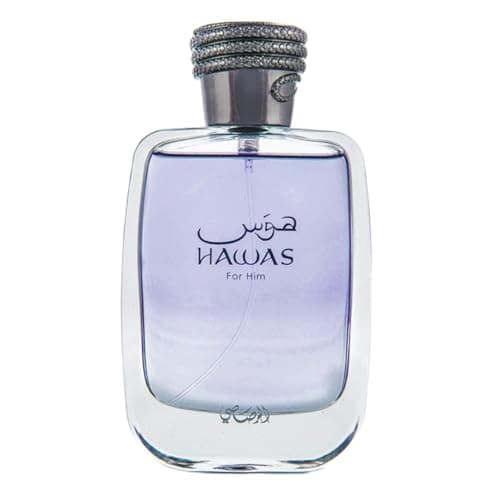
Rasasi Rasasi Hawas For Him

A fresh scent that actually lasts all day

Rasasi Hawas For Him

Fresh / FruityEDPStrong longevitySpring & summer
8.0/10

A fresh, fruity, slightly sweet aquatic that quietly out-performs its price — owners regularly report all-day longevity, which is exactly the thing cheap fresh scents almost never deliver. If you want a 'freshie with power,' this is the one people keep recommending.

Longevity
8
Sillage
7
Projection
7
Value
9
Versatility
9

Pros

  • Fresh-fruity and genuinely versatile
  • Rare all-day longevity for a fresh scent
  • Excellent value

Cons

  • The fresh-aquatic shape is familiar
  • The sweetness won't suit everyone

Don't buy this if…

…you want something dark, woody, or distinctive rather than crowd-pleasing.

$32.00View on Amazon

$44.0027% off

Price as of October 18, 2026. Prices change — Amazon's is the one that counts.

#ad · we may earn a commission from this link to Rasasi Hawas For Him

02
Lattafa Lattafa Asad Zanzibar

Hot-weather wear when the rest of the line is too sweet

Lattafa Asad Zanzibar

Fresh / AquaticEDPModerate — around 6 hoursSpring & summer
6.8/10

It shares a name with Asad and almost nothing else. Black pepper and lavender open onto coconut water, iris and a salty marine accord, with vanilla and incense underneath — a sun-warmed beach scent rather than a boozy tobacco one. It is the Lattafa to own if the rest of the line is too heavy for where you live.

Longevity
6
Sillage
6
Projection
6
Value
8
Versatility
8

Pros

  • Salty coconut-and-iris profile that stands apart from the brand's gourmands
  • Easy to wear in heat, where most of this list is unwearable
  • Credited to a working designer perfumer, Fanny Bal

Cons

  • The weakest performer here — owners commonly report about six hours on skin
  • Fresh bottles are widely reported as sour until they have macerated
  • The Asad name sets an expectation this fragrance does not meet

Don't buy this if…

…you are buying it because you liked Asad — they are unrelated scents that share a label.

$21.32View on Amazon

$23.489% off

Price as of October 18, 2026. Prices change — Amazon's is the one that counts.

#ad · we may earn a commission from this link to Lattafa Asad Zanzibar

03
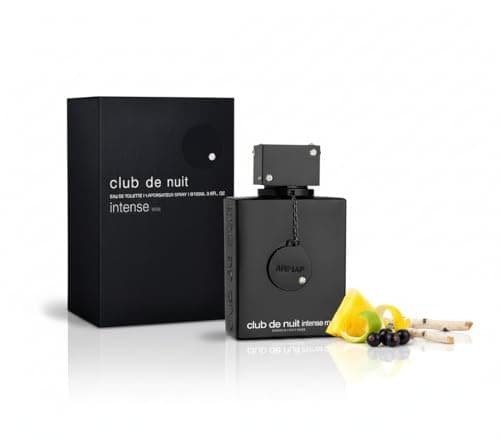
Armaf Armaf Club de Nuit Intense Man

The Aventus opening for a tenth of the money

Armaf Club de Nuit Intense Man

Fruity / WoodyEDTBeast-mode projectionFall & winter
8.8/10

If you have ever wanted to smell like Creed Aventus without spending Creed Aventus money, this is where almost everyone starts — and most people stop. The smoky-pineapple-and-birch opening genuinely fools noses for the first hour, and while it turns a touch sweeter and rougher in the dry-down, you are paying roughly a tenth of the price to find that out.

Longevity
9
Sillage
9
Projection
9
Value
10
Versatility
7

Pros

  • Smoky-pineapple opening that reads as Aventus to most people
  • Enormous projection and 8+ hour longevity by owner consensus
  • One of the best value-per-spray bottles in all of fragrance

Cons

  • Dry-down loses the original's refinement and turns sweeter
  • Batch variation is real — some bottles project noticeably weaker

Don't buy this if…

…you want a quiet, refined skin scent — this is a loud, room-owning fragrance built to be noticed from across a room.

$23.99View on Amazon

$43.9945% off

Price as of October 18, 2026. Prices change — Amazon's is the one that counts.

#ad · we may earn a commission from this link to Armaf Club de Nuit Intense Man

What to actually do with a new bottle

Prime it, then wear it six times

Three or four sprays into the air to clear the tube, then wear it properly on six separate days before forming a view — ideally across different weather. That is the entire protocol, and it resolves most "is my bottle fake or just new" questions.

Store it properly, which is the part that does matter

Cool, dark, stable temperature, cap on, box optional but useful. Not the bathroom, not a windowsill, not the car. Storage demonstrably changes a fragrance over months; shelf-resting demonstrably does much less. Our does cologne expire guide has the full storage rules.

Do not put it in the fridge

A frequently suggested trick with no clear benefit for a finished fragrance stored sensibly, and a real risk of condensation and temperature cycling every time you take it in and out. A dark cupboard at room temperature is better and free.

Do not shake it, and do not decant it to "air" it

Shaking introduces air into the bottle, which is the thing you are trying to avoid over a bottle's life. Decanting into a smaller atomizer is useful for travel and sampling — see our decants guide — but it is not a performance treatment.

If it really is weak, consider the other explanation

A bottle with almost no longevity when everyone else reports eight hours is more likely to be counterfeit than unmacerated, especially in the budget tier where fakes are common. How to spot a fake cologne covers the checks, and how to make cologne last longer covers the application changes that genuinely help.

How we picked

We do not run a testing lab — and we say so

Our rankings compile published note structures and concentration data, aggregate owner and community longevity and sillage reports, and apply a published rubric to every bottle — with first-hand impressions only where they're genuine. The scores are judgments from that research; they are not lab measurements, and we do not claim to have smelled every batch. Formulations change; where a claim came from someone else, we name and link them in Sources.

Questions

Frequently asked

How long does cologne take to macerate?

In production, resting times are set by the manufacturer and the step is finished before the bottle is sold. There is no established waiting period for a bottle on your shelf, and anyone quoting an exact number of weeks is estimating. Wearing a new bottle six times before judging it is a sensible habit regardless of the mechanism.

Is fragrance maceration a myth?

The production step is real and well documented. The home version — that leaving a sealed bottle on a shelf for weeks measurably improves it — is not established, and is very hard to separate from the first sprays clearing the atomizer and from your own nose adapting. Our position is that the advice to wait is good and the explanation usually given for it is shaky.

Should I keep cologne in the fridge?

No. A cool, dark, temperature-stable cupboard achieves the same thing without the condensation and repeated temperature cycling that comes with moving a bottle in and out of a fridge.

Why does my new bottle smell weaker than my old one?

Most often because the first few sprays are mostly air, or because you are comparing a fragrance you know well with one you do not. Batch variation and poor warehouse storage are the other real explanations. Counterfeits are the one worth ruling out if the gap is large.

More in Fragrance Guides

Keep exploring fragrance guides

Keep reading

How we sourced this

Sources

Longevity, sillage and note data are compiled from published manufacturer information and aggregated public reviews, labeled as such — not our own lab measurements. Prices render live from Amazon.