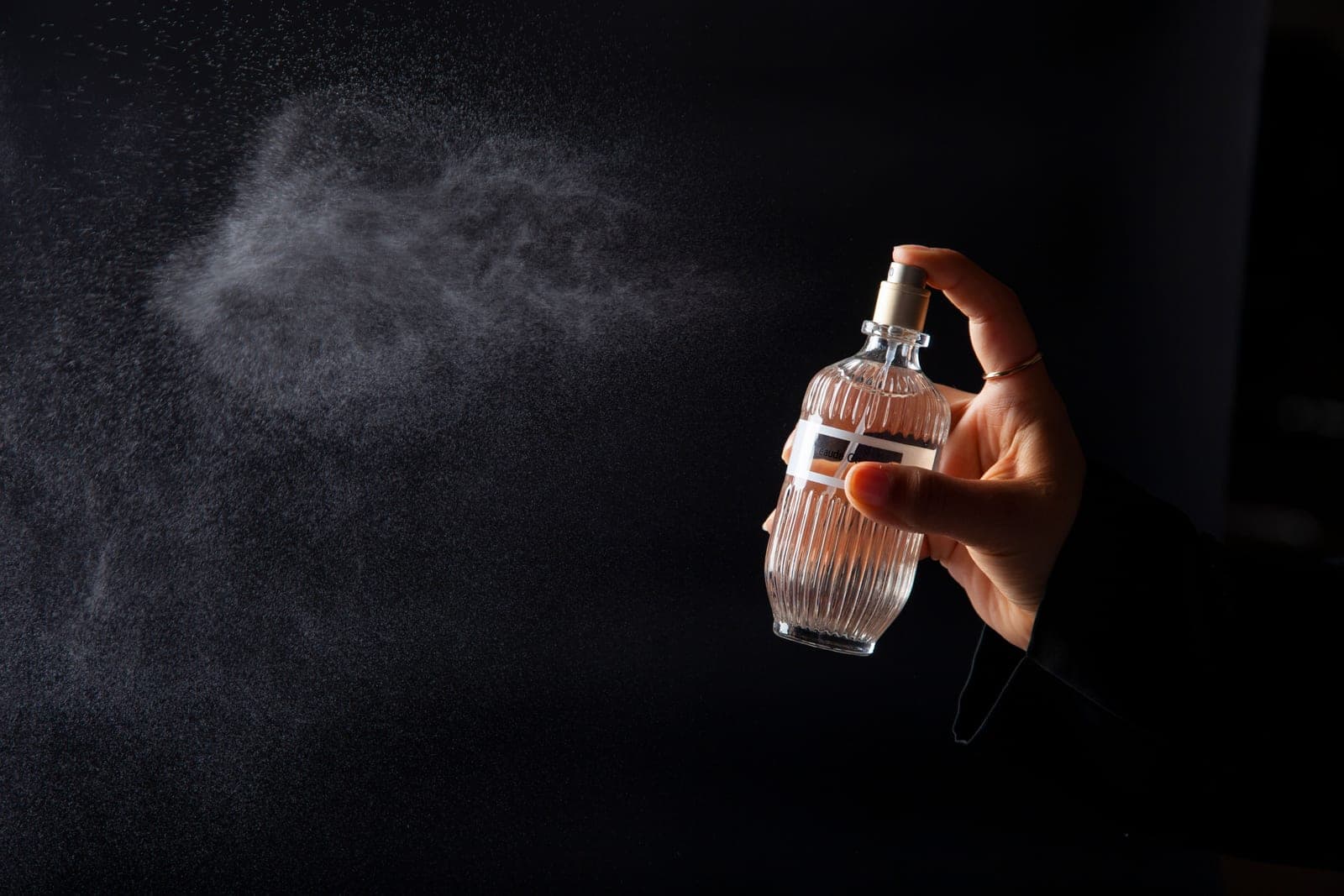
For most people wearing cologne normally, no regulator has found evidence of harm — and no regulator claims the question is fully settled either. The FDA says it has no evidence that phthalates as used in cosmetics pose a safety risk. The American Cancer Society says little evidence shows that normal use of cosmetics increases cancer risk, while noting that few long-term human studies exist. The real, documented issue is allergic and irritant reaction, which affects a minority of people and which the EU regulates by name. Everything below is sourced; where the agencies say they do not know, we say that too.
Start with what is actually on the label
Almost every worry on this page traces back to one line in a US ingredient list: the single word Fragrance. Cosmetics sold at retail in the US have to list their ingredients, and the FDA's rule is that "in most cases, each ingredient must be listed individually". Fragrance is the exception. The FDA's own explanation is that the Fair Packaging and Labeling Act cannot be used to force a company to disclose trade secrets, and fragrance formulas are, in its words, "complex mixtures of many different natural and synthetic chemical ingredients".
So one word on a bottle can stand for dozens of materials. That is a genuine transparency problem, and it is the honest root of most suspicion about this category. It is not, by itself, evidence that the hidden materials are harmful.
Two further details from the same FDA page are worth knowing before you read anything else about this subject. First, fragrance ingredients do not get FDA approval before sale — "the law does not require FDA approval before they go on the market" — but manufacturers are legally responsible for ensuring they are "safe for consumers when they are used according to labeled directions". Second, and counter-intuitively, a product labeled unscented may still contain fragrance ingredients, added specifically to mask the smell of something else in the formula. If you are avoiding fragrance for medical reasons, fragrance-free is the term that means what you think it means.
Do colognes cause cancer?
There is no agency finding that wearing fragrance causes cancer, and the most careful public statement on the broader category comes from the American Cancer Society: little evidence shows that normal use of cosmetics increases cancer risk. The ACS is also explicit about why that statement is hedged rather than definitive — few long-term studies have been done in humans with cosmetics, other than with hair dye, and safety testing usually looks at individual ingredients rather than finished products, so effects that only appear when ingredients are combined can go undetected.
The ACS does note that some cosmetic products may contain materials that agencies classify as carcinogens, naming formaldehyde, benzene and talc, and that formaldehyde-releasing preservatives are sometimes used at low concentrations in personal care products. None of those three is a characteristic fragrance ingredient, and the presence of a classified substance somewhere in a product category is not the same as a demonstrated risk from a particular product at a particular dose. But it is the reason the subject keeps coming up, and pretending otherwise would be dishonest.
The useful comparison here is hair dye, which is the one cosmetic category with enough long-term human data to classify. The International Agency for Research on Cancer treats occupational exposure for hairdressers as probably carcinogenic, while personal use of hair dye is "not classifiable". That is what a well-studied cosmetic looks like: a clear distinction between heavy occupational exposure and ordinary consumer use. Fragrance has nothing like that evidence base in either direction.
The honest summary: no, there is no established link, and nobody who tells you there is can point to one. Equally, nobody can point you to the large long-term study that rules it out, because it has not been done.
The phthalate question, in detail
This is the most specific and most answerable worry in the whole category, because the FDA has surveyed it directly. Three phthalates were historically used in cosmetics: dibutyl phthalate in nail polish, dimethyl phthalate in hair spray, and diethyl phthalate — DEP — in fragrances, where it works as a solvent and fixative. DEP is the one that concerns cologne, and per the FDA it is the only one still commonly used.
The FDA surveyed cosmetic phthalate use in 2004, 2006 and 2010 and reports that use fell considerably across that period, with DBP and DMP now rare. It is careful about the limits of that work: the 2010 survey was a sample designed to track a trend, "not as a comprehensive analysis of all cosmetics on the market".
Its conclusions, verbatim:
- "At the present time, the FDA does not have evidence that phthalates as used in cosmetics pose a safety risk."
- "The FDA does not have safety concerns with the use of DEP" as currently used.
- On its fragrance page, that DEP "does not pose known risks for human health as it is currently used in cosmetics and fragrances".
Two other bodies have looked at the same question. The Cosmetic Ingredient Review expert panel — which the FDA describes as industry-sponsored, a qualification worth keeping — reaffirmed in 2002 that DBP, DMP and DEP were "safe as used in cosmetic products". The National Toxicology Program's expert panel concluded between 1998 and 2000 that reproductive risks from phthalate exposure were "minimal".
The counterweight the FDA itself cites is a 2001 CDC report that found elevated phthalate levels in women of child-bearing age. The FDA's position is that the report did not establish an association between phthalates in cosmetics and a health risk — which is accurate, and also not the same as showing there is none. CDC biomonitoring has consistently made a related point that gets lost in coverage of this subject: detecting a chemical's metabolites in urine shows exposure, not harm, and the health effects of low-level phthalate exposure in humans are not known.
If you want to minimize DEP specifically, the FDA gives the practical answer itself: choose products whose ingredient lists do not include "Fragrance" or "Flavor", since those terms can cover it. For a cologne, that obviously rules out the whole category — which is the honest end of that particular road.
Hormones, testosterone and endocrine disruption
Live search suggestions for this topic include "is cologne bad for testosterone" and "is cologne bad for your hormones", so it is worth answering plainly. The concern is real as a research question: certain phthalates have affected the reproductive systems of laboratory animals, which is why they are studied at all. What does not exist is evidence that wearing cologne measurably alters human hormone levels. The NTP panel reviewing the animal and human evidence described reproductive risk from phthalate exposure as minimal, and no US agency has issued a warning about fragrance use and hormonal health.
Be skeptical of content that moves from "this class of chemical has been studied as an endocrine disruptor" to "your cologne is lowering your testosterone". Those are separated by a dose question nobody has answered, and the step between them is usually being taken by someone selling an alternative.
The risk that is actually documented: allergy and irritation
Here the evidence is not ambiguous, which is why this is the part of the page to take most seriously. The FDA states that "some components of fragrance formulas may have a potential to cause allergic reactions or sensitivities for some people", and acknowledges a regulatory gap: "FDA does not have the same legal authority to require allergen labeling for cosmetics as for food".
The European Union took the opposite approach and legislated. Under the EU cosmetics regulation, named fragrance allergens must appear individually in the ingredient list once they exceed 0.001% in a leave-on product or 0.01% in a rinse-off one. In July 2023 the Commission expanded that list substantially, adding individual labeling requirements for 56 additional fragrance allergens; products that do not comply cannot be placed on the EU market from 31 July 2026, and non-compliant stock already on the market may be sold until 31 July 2028.
The practical consequence for a US buyer is useful: a European ingredient list for the same fragrance will often name materials that the US list hides inside the word "Fragrance". If you react to fragrances and want to know what you are reacting to, the EU ingredient list for the same product is the most accessible disclosure available to you.
If you already know you react, two of our guides go further than this page does: cologne for sensitive skin covers application and product choice when your skin is the problem, and why cologne gives you a headache covers the respiratory and headache side, which is a different mechanism from a skin allergy and is frequently confused with one.
What a cautious person can actually do
None of this supports either of the two loud positions — that fragrance is dangerous, or that the question is silly. It supports a middle one: the documented risk is sensitization, the systemic risks are unestablished rather than disproven, and the sensible response is to reduce unnecessary exposure without giving up something you enjoy. Concretely:
- Fewer sprays, better placed. Most people over-apply, and the fix costs nothing. See how many sprays.
- Spray clothing rather than skin if your skin is the problem — it also makes a fragrance last longer, though it can stain. The trade-offs are in cologne on clothes.
- Patch-test anything new on a small area before wearing it properly, and give it a day.
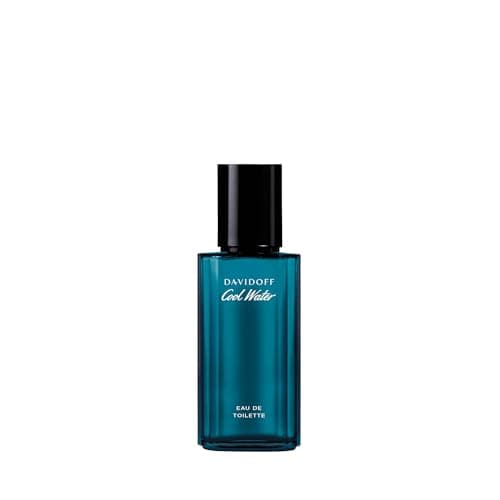
- Prefer a lower concentration if you are trying to reduce how much material lands on you. An eau de toilette carries less aromatic material per spray than an eau de parfum of the same name — the whole ladder is explained in fragrance concentrations.
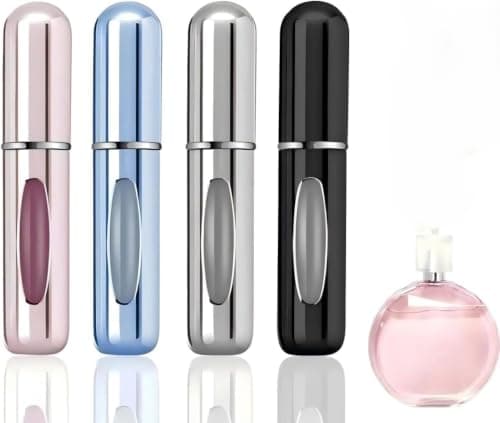
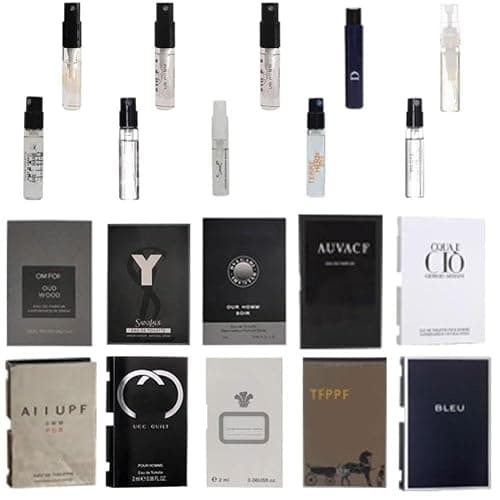
- Buy small until you know. A vial or a decant tells you whether your skin tolerates something before you own 100 ml of it.
- Do not switch to an unregulated alternativeon the assumption that it is safer. "Natural" is not a safety claim, and the FDA notes there is no regulatory definition of "essential oils"; plant-derived ingredients are treated the same as any other. Allergic contact dermatitis from botanical materials is well documented.
The three picks below are the ones that follow directly from that list — a way to test small, a way to control the dose, and a long-standing lower-concentration bottle if you want one you can wear lightly. They are not "safe colognes"; no such category exists and we will not invent one.