Skip to content
Top NoteCo

Fragrance Guides · Fragrance Guides

Can You Spray Cologne on Clothes?

Yes, and it will last far longer than on skin. It can also fade dye, mark silk and leave an oil stain that yellows. Here is the trade, fabric by fabric.

By Stephen V., Editor, Top Note CoLast updated How we pick

#ad— We're reader-supported. When you buy through links on this page we may earn an Amazon Associates commission, at no extra cost to you. It never changes a verdict — we routinely point you at the cheaper bottle. Full disclosure.

Can You Spray Cologne on Clothes?

You can, and there is a real reason to: fragrance on fabric is commonly reported to last 24 to 48 hours, against roughly 2 to 8 hours on skin, because the fibres trap the molecules and there is no body heat driving them off. The cost is that cologne contains alcohol, oils and sometimes dyes, and all three can mark clothing. Spray a cotton shirt from a distance, let it dry before wearing, and keep it off silk, satin, leather and anything pale and expensive.

Why it lasts so much longer on fabric

Skin is a hostile surface for fragrance. It is warm, which accelerates evaporation, it is slightly acidic, and it is constantly renewing itself. Fabric is the opposite: the fibres physically hold the molecules with very little evaporation, and the fragrance only releases as you move. That is why a scarf can still smell of something a week later and your neck cannot smell of it by lunchtime.

It is also why clothing is the standard advice for anyone whose fragrance keeps dying early. If that is the problem you are solving, read how to make cologne last longer first — moisturising unscented skin before spraying fixes a lot of it without going near your shirt.

What actually causes the stains

Three ingredients, three different kinds of damage.

  • Alcohol — can react with fabric dye, causing colour to fade or bleed, and can leave a permanent water-like mark or dull the sheen on delicate materials. The dyes in a garment can be progressively damaged by repeated exposure, so this is cumulative rather than a one-off risk.
  • Oils — penetrate absorbent fibres like cotton and silk and leave a greasy mark that can oxidise and yellow over time. That is the stain that shows up months later on a white shirt.
  • Dyes and colourants — some fragrances are tinted, and the colour can transfer directly if you spray at close range.

None of this means fragrance destroys clothing. It means the risk is real, it is concentrated in particular fabrics, and it is almost entirely avoidable with technique.

Fabric by fabric

FabricRiskWhat to do
Cotton, denim, woolLowSpray from a distance and let it dry. The safest fabrics, and the ones that hold scent best.
Dark or heavily dyed cottonModerateAlcohol can lift dye over repeated applications. Keep the spray off one fixed spot.
Silk and satinHighAlcohol can leave water marks and alter the texture or sheen. Do not spray directly.
Leather and suedeHighLiquids are the wrong thing for these materials entirely. Avoid.
Pale linen and anything tailoredHighOil marks oxidise and yellow on light fabric. Not worth the risk on a garment you care about.

How to do it without ruining anything

Spray the garment on a hanger, not on your body

Hold the bottle six to eight inches away so the mist disperses rather than landing as droplets, and move as you spray so no single spot gets saturated. Spraying while the garment hangs also means nothing lands on your skin at close range, which matters if alcohol irritates you.

Give it ten to fifteen minutes before you put it on

That is long enough for the alcohol to flash off, which is the part that attacks dye and leaves marks. Wearing a damp shirt is how a fragrance becomes a stain.

Test on a hem or an old rag first

On anything you would be upset to damage, apply a little somewhere hidden and let it dry fully before deciding. It takes one evening and it is the only reliable way to know how a specific fragrance behaves on a specific garment.

Or walk through the mist

Spray into the air in front of you and step through it. The coverage is light and even, nothing lands concentrated anywhere, and it is the lowest-risk way to get a trace of fragrance onto clothing. It is also wasteful, so keep it for the garments you would otherwise not spray at all.

Do not put fragrance in the dryer

A frequently suggested trick, and a poor one: you are introducing alcohol and oil to a hot drum full of mixed fabrics with no control over where it lands. If you want laundry to smell of something, that is what laundry products are for.

What to use instead, if the reason is your skin

A large share of people spraying clothes are doing it to keep alcohol off reactive skin, and for them fabric is the wrong solution to the right problem — it moves the alcohol onto the dye instead. Two better answers, and they are what the picks below cover.

An alcohol-free perfume oil. These are applied to skin in small amounts, contain no alcohol at all, and last a long time because oil evaporates slowly. They are for skin and not for clothing — oil is the ingredient that leaves the yellowing stain — but they solve the irritation problem directly. The format is explained in perfume oils vs sprays, and the sensitive-skin routine is in cologne for sensitive skin.

A pocket atomizer for a mid-day top-up.If the real complaint is that nothing is left by six o'clock, one spray in the evening beats over-applying in the morning and beats soaking a shirt. A refillable 5 ml sprayer filled from a bottle you already own costs almost nothing and is cabin-bag legal — see travel-size cologne and flying with cologne.

The short answer

Quick picks

#ad · Live prices from the Amazon Product API, as of October 10, 2026. Where we have no verified live price we show none — we would rather leave a gap than print a number that has rotted.

In detail

The picks, in full

01
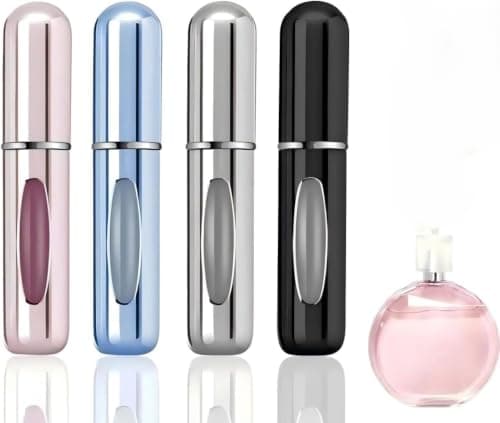
Travel accessory Refillable Travel Atomizers (4 × 5 ml)

Carrying what you already own instead of buying travel-size bottles

Refillable Travel Atomizers (4 × 5 ml)

Accessory5 ml eachCabin-bag legalRefill from any bottle
7.8/10

Four empty 5 ml sprayers you fill from your own bottles. This is the cheapest fix for the two real problems with wearing fragrance away from home: nothing to top up with after hour five, and no way to take a 100 ml bottle through airport security. It is a container, not a fragrance, and we rank it as one.

Usefulness
9
Build quality
5
Leak resistance
6
Value
10
Versatility
9

Pros

  • Turns any full-size bottle into a pocket-size one for a few dollars
  • Well under the 100 ml cabin-baggage limit for liquids
  • Four of them covers a week of different fragrances

Cons

  • Cheap generic hardware — expect one of a set to seal imperfectly
  • Decanting is fiddly with bottles that have crimped, non-removable sprayers

Don't buy this if…

…you want a sealed factory travel spray of one specific fragrance — buy the brand's own 10 ml version instead.

$4.75View on Amazon

Price as of October 10, 2026. Prices change — Amazon's is the one that counts.

#ad · we may earn a commission from this link to Refillable Travel Atomizers (4 × 5 ml)

02
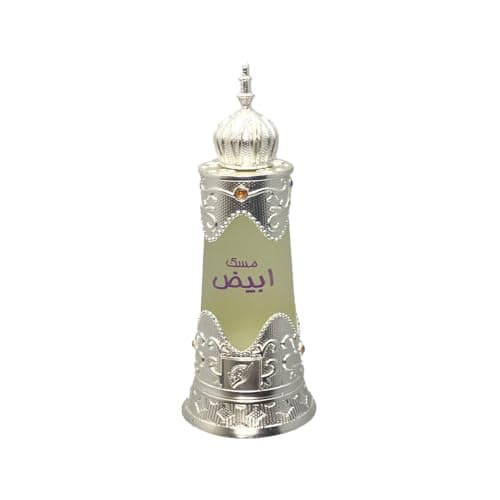
Afnan Afnan Musk Abiyad Concentrated Perfume Oil (20 ml)

The first oil to try, and the safest one to wear anywhere

Afnan Musk Abiyad Concentrated Perfume Oil (20 ml)

White MuskPerfume oilSkin scent, longYear-round
6.6/10

A soft, powdery white musk with a touch of rose and sandalwood — the safest possible introduction to Middle Eastern perfume oils, and the one most often recommended to someone trying the format for the first time. It does not project much at all; what it does is make you smell clean and quietly good for a very long time.

Longevity
8
Sillage
4
Projection
3
Value
9
Versatility
9

Pros

  • Clean, powdery and essentially impossible to offend anyone with
  • Layers under almost any spray fragrance without fighting it
  • The standard beginner recommendation for the whole oil category

Cons

  • Sits on the skin — nobody notices this from more than an arm away
  • Simple by design, so it will not hold a fragrance hobbyist's interest

Don't buy this if…

…you want compliments from across the room. This is a private, close-wearing scent by design.

$21.45View on Amazon

Price as of October 10, 2026. Prices change — Amazon's is the one that counts.

#ad · we may earn a commission from this link to Afnan Musk Abiyad Concentrated Perfume Oil (20 ml)

03
Al Haramain Al Haramain Tanasuk Concentrated Perfume Oil (12 ml)

The oil that proves the format is not just for skin scents

Al Haramain Tanasuk Concentrated Perfume Oil (12 ml)

Rose / Amber GourmandPerfume oilVery longFall & winter
7.4/10

Rose, grenadine and saffron over dry wood, jasmine and amber, finishing on vanilla, musk and brown sugar. This is the oil that changes people's minds about the format — the syrupy rose-and-brown-sugar accord is genuinely distinctive, and it projects better than an oil has any right to by owner reports.

Longevity
9
Sillage
7
Projection
6
Value
9
Versatility
6

Pros

  • Syrupy rose, saffron and brown sugar — distinctive, not a generic musk
  • Unusually strong projection and sillage for an alcohol-free oil
  • Twelve milliliters lasts months at two dabs a wear

Cons

  • Sweet and dense — this is a cold-weather, evening proposition
  • A dab bottle, so application takes more care than a spray

Don't buy this if…

…you want a fresh or office-safe scent — this is rich, sweet and deliberately noticeable.

$20.00View on Amazon

Price as of October 10, 2026. Prices change — Amazon's is the one that counts.

#ad · we may earn a commission from this link to Al Haramain Tanasuk Concentrated Perfume Oil (12 ml)

The practical rules

Use clothing as a supplement, not a replacement

The best result is two or three sprays on skin — neck, chest — plus one onto a cotton garment from a distance. Skin gives you the development: the top notes opening and the base emerging over hours. Fabric gives you the persistence. Fabric alone smells static, because nothing on a shirt is warm enough to move the composition along.

Never spray a jacket you cannot wash

Wool coats, suit jackets and leather hold fragrance for weeks, which sounds like a feature until it is a fragrance you have gone off, on a garment that costs money to dry-clean. Spray the shirt underneath instead.

If it has already stained

Act while it is fresh and follow the garment's care label rather than general advice; a fresh alcohol mark on cotton often lifts with a normal wash, and an oil mark needs treating as a grease stain. On leather and suede, liquid is the wrong approach entirely — those are a job for a specialist rather than a home remedy.

And check the bottle, not the shirt

If the reason you started spraying clothes is that a fragrance seems to have stopped working, there are two much more likely explanations than dose: your own nose has adapted to it, or the bottle has aged. Both are covered in why you cannot smell your own cologne and does cologne expire.

How we picked

We do not run a testing lab — and we say so

Our rankings compile published note structures and concentration data, aggregate owner and community longevity and sillage reports, and apply a published rubric to every bottle — with first-hand impressions only where they're genuine. The scores are judgments from that research; they are not lab measurements, and we do not claim to have smelled every batch. Formulations change; where a claim came from someone else, we name and link them in Sources.

Questions

Frequently asked

Does cologne stain clothes?

It can. The alcohol can react with fabric dye and fade or bleed it, and on delicate materials it can leave a water-like mark or dull the sheen; the oils can penetrate absorbent fibres and leave a greasy mark that oxidises and yellows over time; and tinted fragrances can transfer colour if sprayed at close range. Cotton, denim and wool are the low-risk fabrics; silk, satin, leather and pale tailoring are not.

How long does cologne last on clothes?

Commonly 24 to 48 hours and sometimes longer, against roughly 2 to 8 hours on skin. Fabric fibres trap the fragrance molecules and there is no body heat to drive evaporation, so the scent sits there and releases slowly as you move. That persistence is the whole reason people spray clothing.

Should you spray cologne on clothes or skin?

Skin for the experience, fabric for the persistence, and both is usually the right answer: two or three sprays on the neck and chest plus one onto a cotton garment from six to eight inches away. Skin lets the fragrance develop from top notes to base; fabric only holds a static version of it. If you have sensitivity issues that rule out skin, an alcohol-free oil is a better fix than soaking your shirt.

Can you spray perfume on silk?

We would not. Alcohol can leave water marks on silk and alter the texture or sheen, and the damage is not always reversible. If you want a fragranced silk garment, spray into the air and walk through the mist, or spray the cotton layer underneath it instead.

Does spraying cologne on clothes make it last longer?

Yes, substantially — it is the single most effective way to extend wear time. The trade-off is staining risk and a flatter smell, because a fragrance on fabric does not warm up and develop the way it does on skin. The low-risk version is one light pass onto cotton, from a distance, ten to fifteen minutes before you get dressed.

More in Fragrance Guides

Keep exploring fragrance guides

Keep reading

How we sourced this

Sources

Longevity, sillage and note data are compiled from published manufacturer information and aggregated public reviews, labeled as such — not our own lab measurements. Prices render live from Amazon.