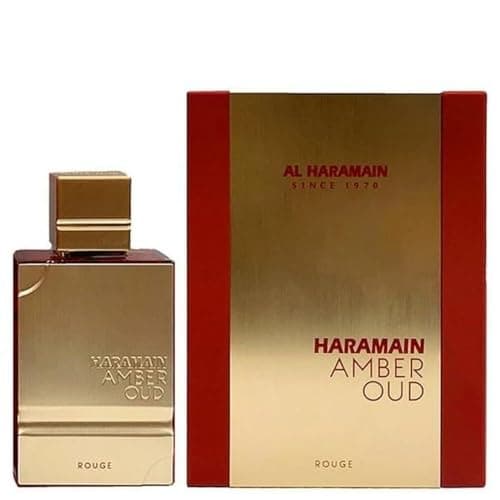
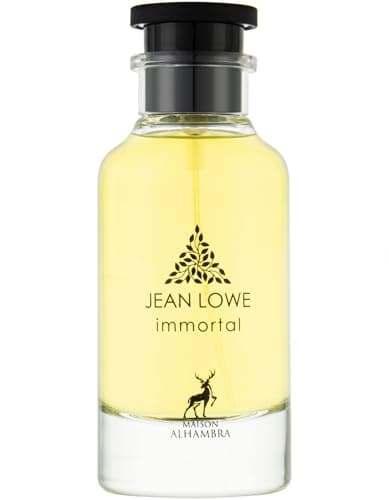
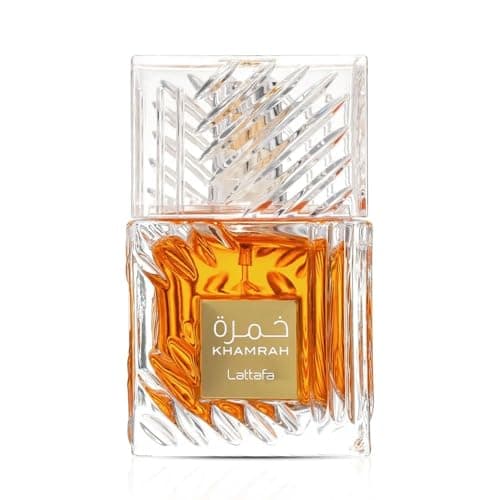
Lattafa Khamrah is the unisex bottle to buy first — a boozy dates-and-cinnamon gourmand that reads as warm rather than gendered, performs for most of a day, and costs less than a designer gift set. It is the right pick for a household that wants one bottle two people will both reach for. If you want the same shared-wear logic with more projection, Al Haramain Amber Oud Rouge is the heavier alternative; if you want something fresh instead of warm, skip to Maison Alhambra Jean Lowe Immortel at number three.
"Unisex" is a marketing word — this is what actually matters
There is no chemical difference between a men's and a women's fragrance. The same aroma materials go into both; the label is a merchandising decision made years before the bottle reaches a shelf. What makes a fragrance genuinely shareable is structural, and it comes down to three things.
The first is the absence of the two loudest gender signals in modern perfumery: the aggressive aromatic-fougère barbershop accord that reads as "men's", and the big white-floral tuberose-jasmine heart that reads as "women's". Take both out and most people stop assigning a gender to what they are smelling. The second is a dominant accord that sits in the shared middle — amber, resin, oud, saffron, vanilla, clean citrus, salt. The third, and the one people forget, is dosage: a bottle only shares well if it behaves at two sprays and at five, because two people will never apply the same amount.
That is why this list leans heavily toward the amber and gourmand side of the wheel. It is not a coincidence or a trend — it is where the genuinely genderless material palette lives. If you want the family map behind that, our fragrance families guide explains which families carry gender coding and which do not, and best amber colognes goes deeper on the single family that dominates this page.
How we ranked these
Rank one goes to the bottle with the widest overlap: the one most likely to be worn by two different people, on two different days, to two different places, without either of them feeling they are wearing someone else's fragrance. After that we weighted performance, because a shared bottle gets used twice as fast and a weak performer is twice as annoying. Price per milliliter broke the ties — every bottle here is in the budget-to-mid tier for a reason, and the Arabian houses own this category outright because their house style never adopted the Western gender split in the first place.
Buying a fragrance two people will share
Buy the bigger bottle, but only after a sample
A shared bottle empties roughly twice as fast, so the per-milliliter math that normally favors restraint flips. The catch is that a shared bottle also has two chances to be wrong. Sample first — a discovery set costs a fraction of a mistake, and our testing guide explains why four hours on skin beats thirty seconds on a card.
Watch the dose, not the bottle
Most "this smells masculine on me" complaints are dosage complaints. Three sprays of an amber gourmand on a warm neck is a different fragrance from one spray on a cool wrist. If a shared bottle is not working for one of you, halve the sprays before you blame the juice — our how many sprays guide has the numbers by concentration.
Skin chemistry is real, and it is why two people disagree
The same bottle genuinely smells different on two people: skin oil content, pH and temperature all shift which notes dominate. Why cologne smells different on everyone covers the mechanism. For a shared purchase the practical consequence is simple: whoever has the drier skin should expect less longevity and should be the one to test it first.
Avoid the flanker trap
Several bottles here have siblings with near-identical names, and the siblings are not interchangeable. Read the full product title on the listing before you buy — what is a flanker explains how the naming works and which kinds of flanker are worth the money.